

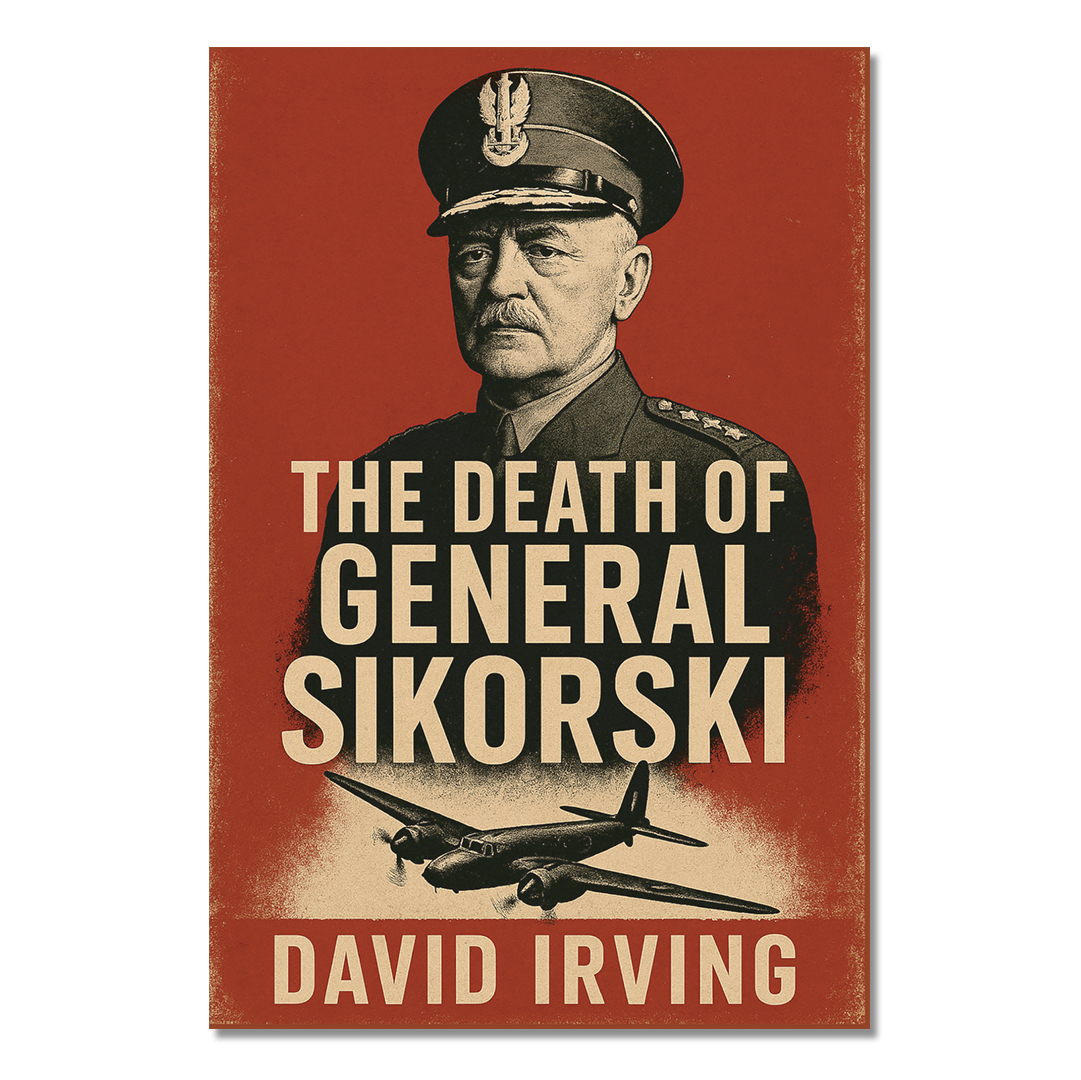
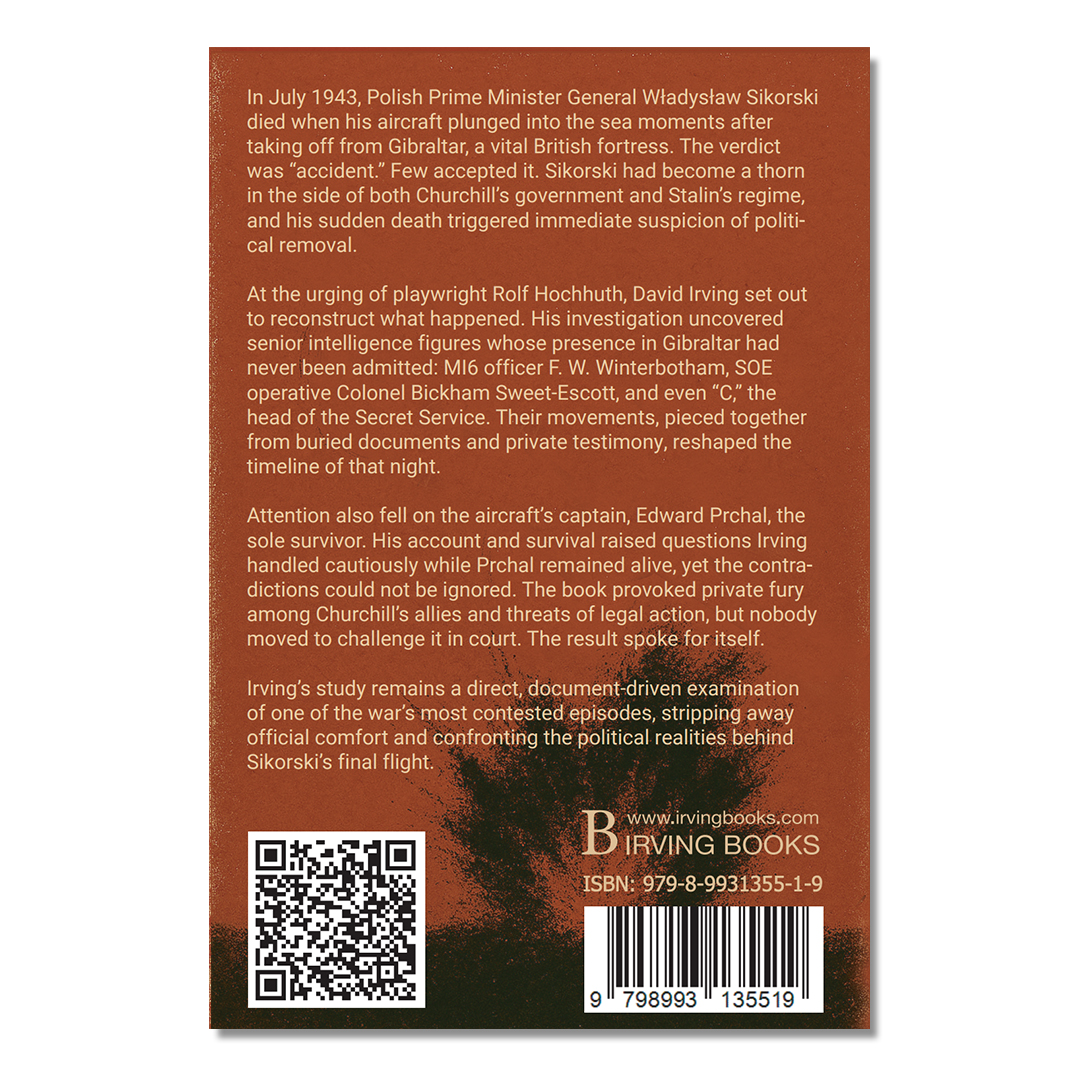


On the night of July 4, 1943, a Consolidated Liberator bomber roared down the runway at Gibraltar Airport. Sixteen seconds after takeoff, it plunged into the black waters of the Mediterranean.

The only survivor was the Czech pilot, Flight Lieutenant Eduard Prchal.
The official verdict: accident. The elevator controls jammed for reasons unknown.
Almost no one believed it.
Within hours of the crash, whispers of assassination swept through the corridors of power in London, Moscow, and Washington. Nazi propagandist Joseph Goebbels immediately accused Churchill. Polish exile circles pointed at the Soviets. Others suspected the British — or even a rival faction within Poland’s own fractured government-in-exile.

The timing was devastating, and deeply suspicious. Just weeks earlier, Sikorski had demanded a Red Cross investigation into the Katyn Forest massacre — the mass execution of over 22,000 Polish officers, intellectuals, and prisoners by Stalin’s NKVD. It was a demand that enraged the Kremlin. Stalin severed diplomatic relations with the Polish government-in-exile and began maneuvering to install his own puppet regime in Warsaw. Sikorski was the only Allied leader with the stature, credibility, and sheer force of will to stand in his way.
With Sikorski gone, Poland’s fate was sealed. No Polish leader who followed would ever command the same respect from Churchill or Roosevelt. Within months, Churchill quietly agreed to hand eastern Poland to Stalin. Within two years, Poland disappeared behind the Iron Curtain for nearly half a century.
Was this really just an accident?
Consider the circumstances that David Irving meticulously reconstructs in this landmark investigation. A Soviet aircraft carrying Ambassador Ivan Maisky was parked on the same Gibraltar airfield that night — giving Moscow’s agents confirmed physical access to the runway. The head of British counter-intelligence for the entire Iberian Peninsula was Kim Philby — later unmasked as one of the most damaging Soviet double agents in history, a man whose treachery cost countless Western operatives their lives. Security around Sikorski’s aircraft was found to be inexplicably lax. Several bodies, including that of Sikorski’s daughter Zofia, were never recovered from the wreckage. And the RAF’s own Court of Inquiry could determine nothing beyond the deliberately vague conclusion that “the aircraft became uncontrollable for reasons which cannot be established.”
Irving goes further than any previous investigator. He secured an exclusive, extensive interview with Eduard Prchal — the sole survivor and the man at the controls when the Liberator went down. He tracked down and interviewed witnesses who stood on the runway that night, including the actor Anthony Quayle, who was then serving as aide-de-camp to the Governor of Gibraltar. He gained access to the private papers of General Mason-Macfarlane, the Governor himself — papers that contain a detailed, never-before-published account of the crash and its chaotic aftermath. And he obtained and reproduces in full the RAF’s classified inquiry report, a document the British government fought to keep sealed for decades.
What emerges is far more than a crash investigation. It is a portrait of an alliance in crisis — of the impossible tensions between Churchill’s pragmatic need to keep Stalin fighting, Roosevelt’s determination to avoid a rift with Moscow, and Sikorski’s unyielding insistence that Poland’s sovereignty could not be traded away as the price of victory. It is a story of men who knew the truth about Katyn and chose silence. Of classified cables, backroom deals, and a political murder that, if proven, would implicate the highest levels of Allied command.
Irving’s narrative moves with the pace and tension of a political thriller — from the dusty airfields of the Middle East where Sikorski inspected his troops, to the fevered diplomatic maneuvering in London and Moscow, to the darkened runway at Gibraltar where sixteen seconds separated a statesman from oblivion.
This book does not offer easy answers. What it offers is something more valuable: the evidence, the testimony, and the unasked questions that the official record was designed to bury.
Now available through Focal Point Publications, Accident: The Death of General Sikorski remains the definitive investigation into one of World War II’s most consequential unsolved mysteries. Featuring photographs, maps, and documentary evidence unavailable elsewhere, this 238-page work is essential reading for anyone who believes that history’s most important truths are often the ones most carefully hidden.
British documents relating to the crash remain classified until 2050. Russian and Spanish archives remain sealed.
The questions Irving raised nearly six decades ago have still not been answered.

Reviews
There are no reviews yet.