

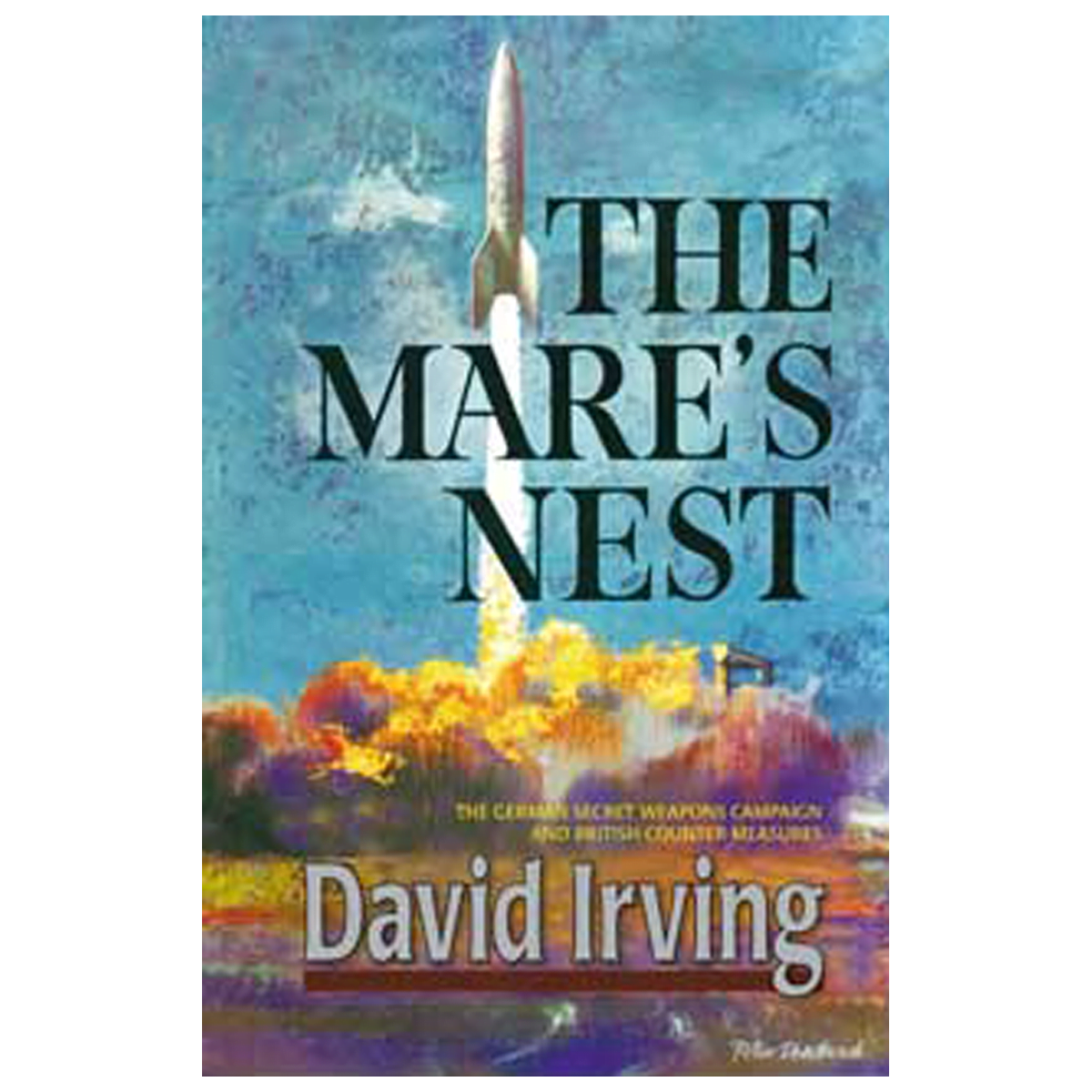
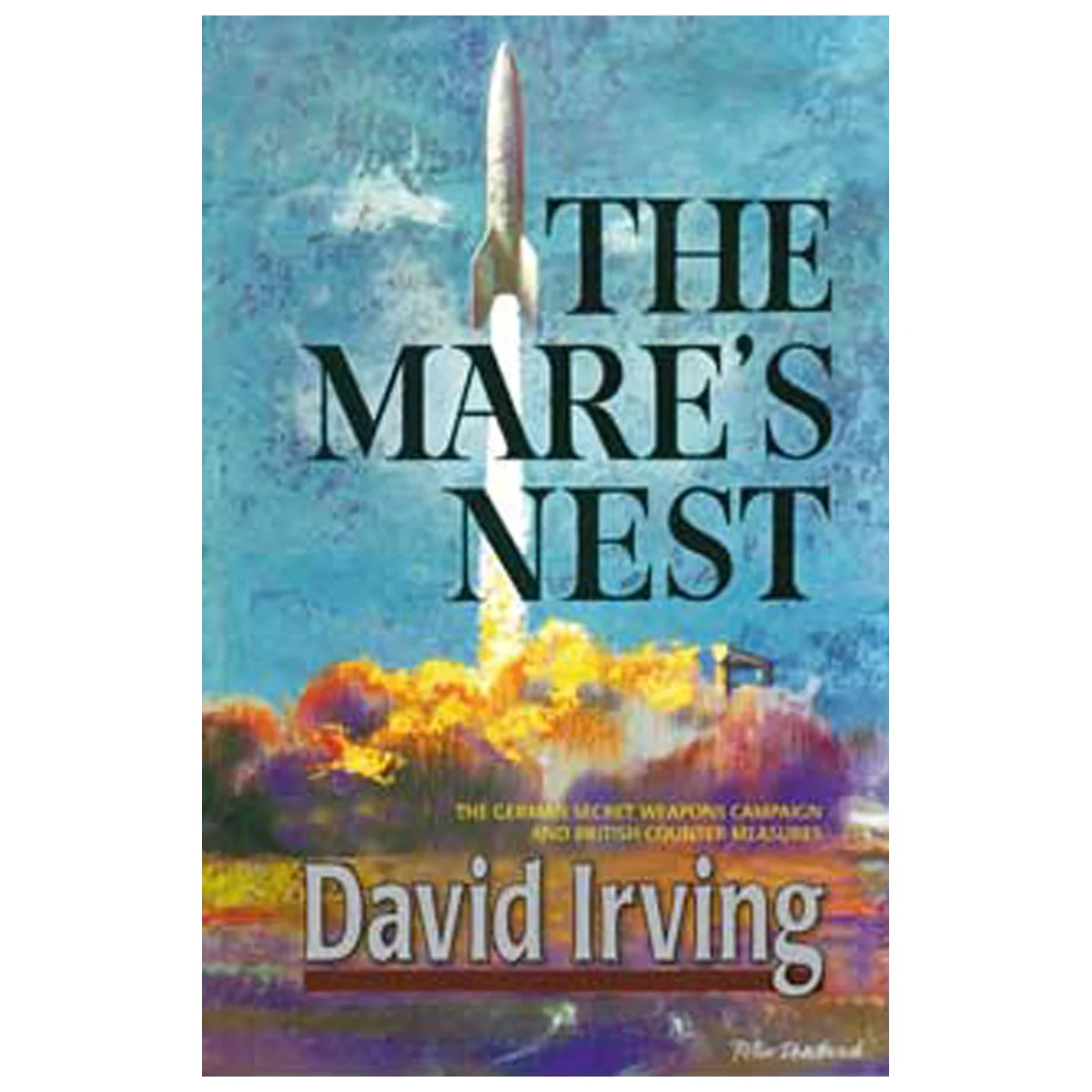
The Mare’s Nest: The German Secret Weapons Campaign and British Intelligence
By David Irving | First published 1964 | Hardcover edition
Historical Significance
First published in 1964, this study documents the British intelligence effort to understand and counter Germany’s V-weapons programme. Irving gained access to classified British intelligence files and conducted interviews with the scientists and intelligence officers who assessed the threat.
Scope and Content
The work examines how British intelligence detected the Peenemünde research establishment, assessed the V-1 flying bomb and V-2 rocket programmes, and organised countermeasures including the bombing raids that attempted to disrupt German development. The study documents intelligence successes and failures with equal detail.
Archival Foundation
Research conducted in British intelligence archives with access to wartime assessment documents. Interviews with R.V. Jones and other scientific intelligence officers provide first-hand accounts of the analytical process.
For Researchers and Collectors
Essential for intelligence historians, V-weapons researchers, and scholars studying wartime scientific assessment. A primary reference for understanding the intelligence dimension of the secret weapons campaign.
Edition Details
Hardcover binding with archival-quality paper stock. Photographic plates and technical diagrams. Built for specialist library and private collection use.
About This Edition
Limited modern collector printing from Focal Point Publications. Irving’s first major work, returned to print in complete form.
Related Works from Irving Books
- The Virus House — German atomic research
- The Rise and Fall of the Luftwaffe — German air power
- Breach of Security — German signals intelligence















Joseph Austin-Crowe –
The book follows a fascinating parallel narrative, where the two 'sides' are presented in their modes of thinking, yet hints of the outcomes of any decisions (other than the obvious!) are provided as tantalising teasers to each next chapter.
The entire subject, that is, weapon development in WWII – may seem vast, but really this is a treatment of the intelligence efforts relating to the V-weapons. When considered, should any document on this subject not be more than a very narrow, dry, discourse?
Quite the opposite! Mr Irving provides insight into the personalities involved, fairly treating them with absolutely no obvious bias one way or the other.
I found myself, on two or three occasions, second-guessing (not accepting?) Mr Irving's analysis of some of the player's motivations (eg, Cherwell), but then realising that this is part of the good authorship of this book: A viewpoint is not so hammered down that it is not left open to some interpretation. This, I find, is commendable.
Frank Kalesnik (verified owner) –
A thorough look at the German V weapons program paired with an examination of British efforts to detect and counteract these weapons. Especially interesting are the accounts of political infighting on both sides of the English Channel, particularly the competition between the Wehrmacht, Luftwaffe, and SS for control of these programs. Highly recommended.