History is not written by the victors alone. It is written — and rewritten — by those willing to dig into the archives, to track down the original documents, and to let the evidence speak for itself. Over a career spanning more than sixty years, David Irving has done precisely this, unearthing primary sources that other historians either missed, ignored, or never knew existed.
Here are five primary sources that shaped Irving's major Second World War books.
1. The Schmundt Adjutant Notes
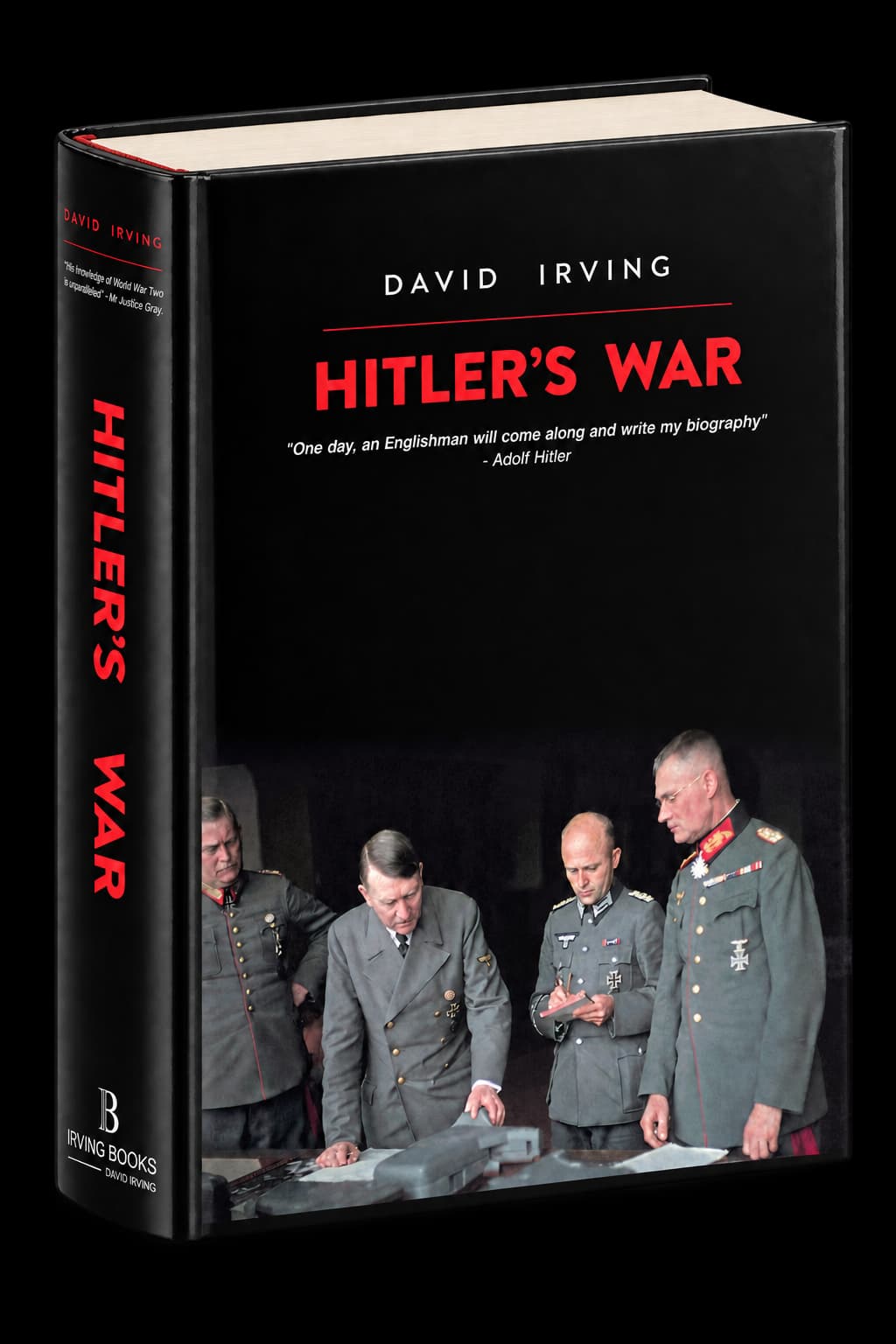
The discovery: In the late 1960s, while researching what would become Hitler's War, Irving tracked down the private papers of Colonel Rudolf Schmundt, Hitler's chief Wehrmacht adjutant from 1938 to 1944. Schmundt had kept meticulous daily notes of conferences, decisions, and conversations at the Führer's headquarters — a contemporaneous record of what Hitler actually said and ordered, as distinct from the post-war memoirs of surviving generals, which were inevitably coloured by self-justification.
Why it mattered: Before the Schmundt notes surfaced, the primary record of Hitler's military decision-making came from the formal "Führer Conferences" transcripts and the heavily edited memoirs of generals like Guderian, Manstein, and Halder. Schmundt's notes provided the unfiltered, day-to-day reality — including decisions, hesitations, and reversals that the official record smoothed over. They allowed Irving to reconstruct the war from Hitler's headquarters with a granularity no previous historian had achieved.
Read more in: Hitler's War
2. The Goebbels Diary Microfiches (Moscow)
The discovery: In 1992, Irving learned that the complete wartime diaries of Joseph Goebbels — long thought to have been destroyed — had survived in the former Soviet archives in Moscow. The Soviets had captured the glass-plate negatives from the Reich Chancellery in 1945 and had quietly held them for nearly fifty years. Irving flew to Moscow, negotiated access to the archive, and arranged for the microfiching of the entire collection — some 75,000 pages of Goebbels' handwritten and dictated diary entries covering the years 1923 to 1945.
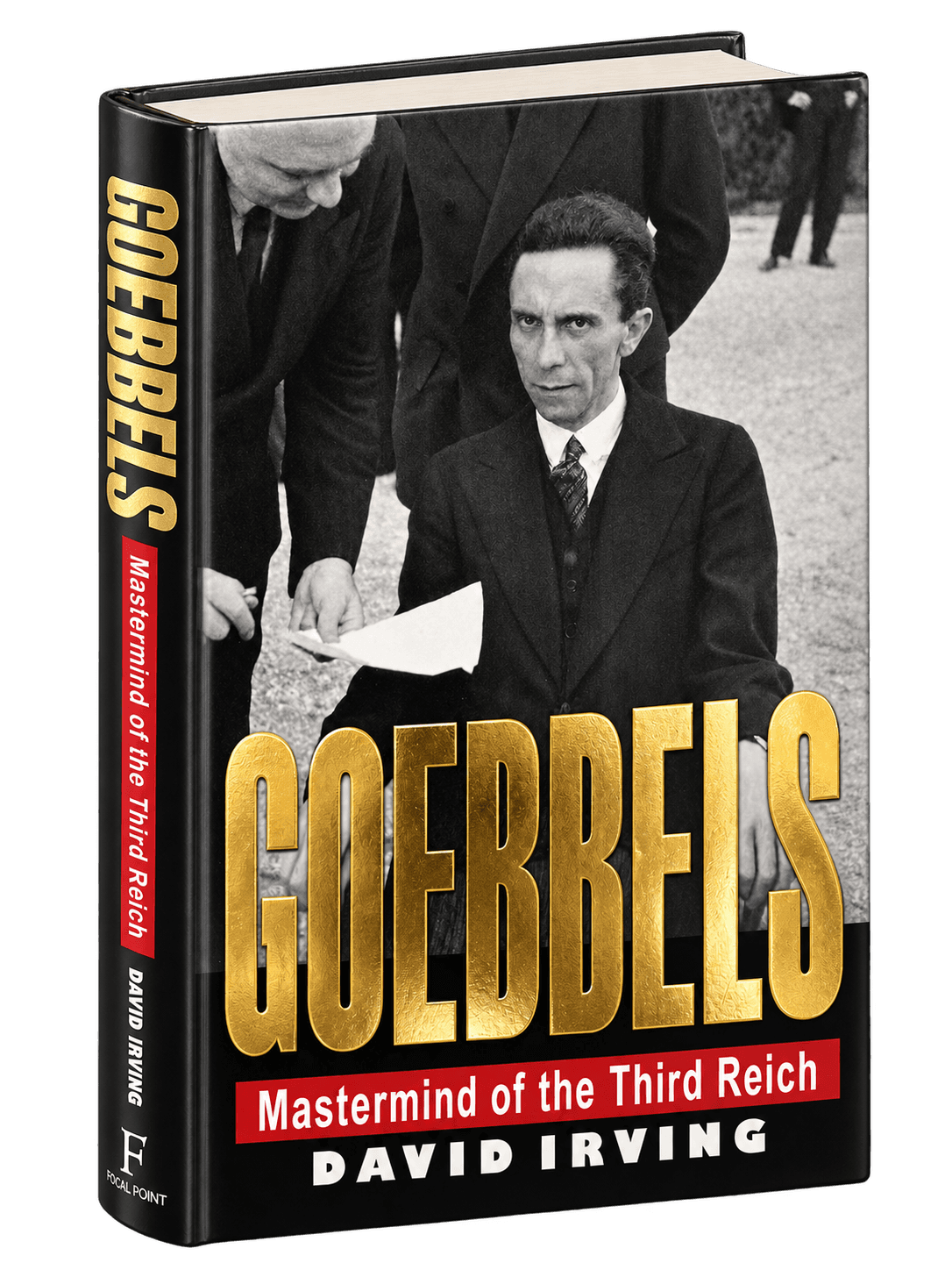
Why it mattered: Goebbels' diaries are one of the most important primary sources for the history of the Third Reich. They provide an almost daily record of Nazi policy, internal power struggles, propaganda strategy, and the regime's response to military developments. Fragments had been published before, but the complete collection — spanning two decades — transformed historians' understanding of the regime's inner workings. The diaries revealed the internal debates, rivalries, and crises that official records concealed.
Read more in: Hitler's War and Goebbels: Mastermind of the Third Reich
3. The Rommel Family Papers
The discovery: In the 1970s, Irving was given exclusive access to the private papers of Field Marshal Erwin Rommel by the Rommel family. These included Rommel's personal letters to his wife Lucie, his campaign diaries, and a trove of photographs and documents that had never been made available to any other historian.
Why it mattered: Every previous biography of Rommel had been based on published sources, post-war interviews, and the sanitised official record. The family papers revealed a far more complex figure: a brilliant tactician who was also politically naïve, a loyal soldier who gradually lost faith in Hitler's leadership, and a man caught in the web of the July 1944 assassination plot. Irving's The Trail of the Fox used these papers to construct what remains the most intimate and authoritative portrait of the Desert Fox.
The papers also shed new light on the circumstances of Rommel's death. While it was known that Rommel had been forced to take poison in October 1944, the family papers provided new details about the ultimatum delivered by Hitler's emissaries and Rommel's final hours — details that the family had kept private for three decades.
Read more in: The Trail of the Fox: Rommel
4. The Dresden Police Report (TB 47)
The discovery: While researching the Allied bombing of Dresden in February 1945 for his first book, The Destruction of Dresden (1963), Irving located the official situation report — known as Tagesbefehl 47 (TB 47) — compiled by the Dresden police immediately after the raids. This document, issued by the city's police chief on March 22, 1945, provided the most authoritative contemporaneous assessment of the casualties and destruction.
Why it mattered: The bombing of Dresden was already one of the most controversial episodes of the air war, but the absence of reliable casualty figures had allowed wildly inflating claims to circulate. TB 47, along with other municipal and police records Irving unearthed, provided a documentary baseline that grounded the debate in evidence rather than speculation. Irving's willingness to revise his own figures downward in later editions — as new evidence came to light — demonstrated the difference between a historian committed to the documentary record and a polemicist committed to a thesis.
The broader significance was methodological. Irving showed that even for an event as chaotic and destructive as the Dresden bombing, contemporaneous official documents existed and could be found — if a historian was willing to look for them. This set the standard for all subsequent research on strategic bombing casualties.
Read more in: Apocalypse 1945: The Destruction of Dresden
5. Churchill's "Action This Day" Minutes
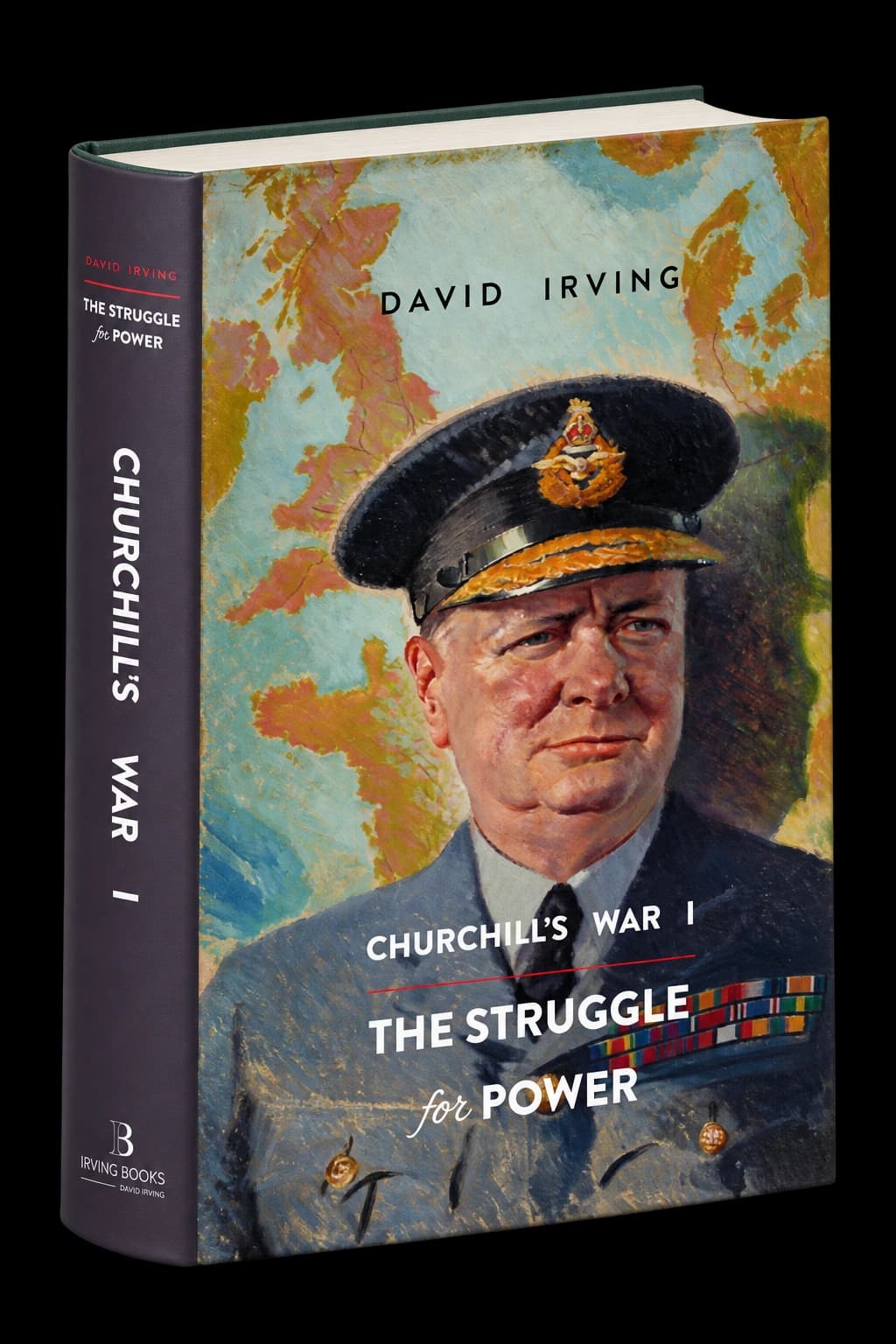
The discovery: While researching Churchill's War, Irving gained access to a body of Churchill's private minutes and memoranda — including the famous "Action This Day" directives that Churchill used to bypass normal channels and issue direct orders to ministers, military commanders, and civil servants. These documents, many of which had been retained in private collections or were closed under long embargo periods, revealed the real mechanics of Churchill's wartime leadership.
Why it mattered: The standard narrative of Churchill's war leadership — drawn largely from Churchill's own six-volume memoir, The Second World War — presented a picture of decisive, far-sighted statesmanship. The private minutes told a different story: one of impulsive interference in military operations, bitter clashes with his own generals, and a management style that oscillated between brilliance and chaos.
These documents were particularly revealing about Churchill's relationship with Bomber Command and the strategic bombing campaign. They showed that Churchill was far more directly involved in authorising specific raids — and far more aware of their consequences — than his post-war memoir suggested. Irving's use of these sources produced a portrait of Churchill that was neither the heroic icon of popular mythology nor a crude caricature, but something more interesting and more human: a man of extraordinary gifts operating under unbearable pressure, making decisions that would haunt him for the rest of his life.
Read more in: Churchill's War, Volume I
The Lesson
What unites these five discoveries is not a single historical thesis but a method. David Irving does not write history from other historians' books. He writes from the documents themselves — tracked down in attics, archives, and private collections across three continents. The result is history that is closer to the original events, less mediated by interpretation, and more open to the reader's own judgment.
As Irving has often observed: the documents do not always say what we expect them to say. That is precisely why they matter.
Explore the books built from these discoveries in our shop.