About the book
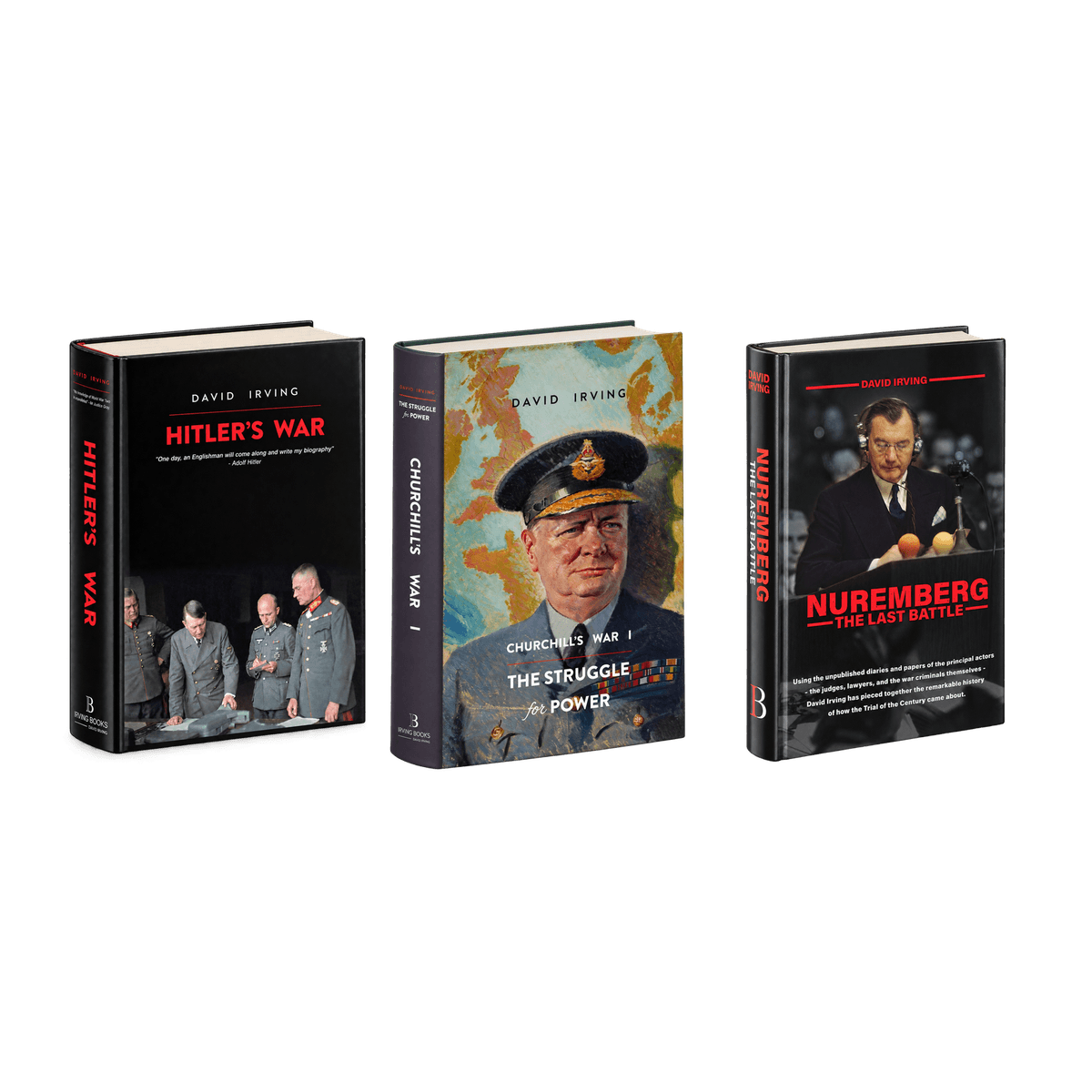
Germany has surrendered, but the struggle over judgment is just beginning. David Irving follows American prosecutor Robert Jackson from the negotiations that create the Nuremberg tribunal to his confrontation with Hermann Göring, placing the public proceedings alongside the rivalries and calculations behind them. Jackson wants to establish that leaders can be held personally responsible for aggressive war. The defendants must choose between defending the regime, blaming absent superiors and separating their own actions from its crimes.
Inside the book
The narrative moves between the courtroom, prison cells and the judges’ private conferences. It covers the dispute over prosecuting aggressive war, Jackson’s falling-out with William Donovan, Rudolf Hess’s claimed amnesia and Albert Speer’s efforts to distance himself from the other defendants. The final chapters follow the verdicts, appeals, executions and investigations into Göring’s suicide, before considering the trial’s aftermath.
The author’s argument
Using diaries, letters, interrogation records and interviews, Irving argues that political interests and the victors’ power compromised the proceedings. His account also advances Holocaust-denial claims about Auschwitz and the number of Jews murdered, which contradict established historical evidence. Photographs, reproduced documents, chapter source notes and an index accompany the narrative.
This edition
This listing is for the standard hardback. Signed and thumbprinted copies are listed separately on the Collector Copies page.